Different Levels of Desire in a Couple: How to Talk Without Blame
How to talk about differences in desire without deciding who is normal, protect consent and affection, interrupt pressure-and-withdrawal cycles, and know when o...

When one partner wants sexual activity more often, neither person is automatically defective, selfish, cold, or demanding. The useful question is not “Whose libido is normal?” It is “How can we understand this difference while protecting consent, affection, and both partners' dignity?”
Name the pattern without assigning a villain
Sexual desire discrepancy means partners differ in their current level, frequency, or timing of desire. ISSM-reviewed education describes it as a common relationship concern and recommends open, nonjudgmental communication, clear boundaries, and consent without pressure (ISSM).
“Discrepancy” is useful because it describes the distance between two experiences. It does not declare that one person's desire is too high or the other's too low.
If one partner is personally distressed by a change in desire, begin with What Does Low Libido Mean in Men?. If desire is present but erection response is the concern, read Low Libido vs. Erectile Dysfunction.
Separate four conversations that couples often combine
Topic | Useful question | Blaming shortcut to avoid |
Frequency | How often does each person currently want sexual connection? | “You always” or “you never” |
Meaning | What does sex represent: closeness, play, reassurance, release, validation, or something else? | “If you loved me, you would” |
Pressure | What words, timing, or reactions make either person feel cornered? | sulking, bargaining, testing, or scorekeeping |
Affection | Which forms of warmth feel welcome without implying an owed outcome? | withdrawing all affection after a no |
This separation matters. A disagreement about frequency may actually be a disagreement about reassurance. Avoiding a hug may reflect fear that it will be treated as consent to more. Repeated initiation may be a request for closeness expressed in a form the other partner cannot comfortably receive.
Begin outside the bedroom
Choose a neutral time when neither person is initiating or recovering from disappointment. Keep the first conversation short enough that it can remain specific.
Try:
“I care about us, and I want affection and sexual choices to feel safe for both of us. Can we spend ten minutes talking about what desire has felt like lately, without deciding who is right?”
Then each person answers:
· What kind of connection have I been missing?
· What makes desire easier or harder to access?
· What makes me feel pressured or rejected?
· What affection feels good without promising sex?
· What would a respectful “not tonight” and a respectful initiation sound like?
Listen for meaning before proposing a solution.
Consent is the floor, not a bargaining point
A relationship does not create standing consent. ISSM guidance emphasizes that every sexual encounter should be consensual and that neither partner should feel pressured (ISSM).
The higher-desire partner is allowed to have feelings about a no. The lower-desire partner is allowed to decline without punishment. Both can discuss unmet needs, but sadness, gifts, chores, commitment, or past frequency do not create a debt.
A useful response to a no is:
“Thank you for being clear. Would affection without escalation feel good, or would you prefer space?”
This preserves choice and reduces the fear that every touch is a hidden negotiation.
Desire changes with more than attraction
European Association of Urology guidance describes desire as involving biological, psychological, and cultural components. It also notes possible roles for depression, anxiety, relationship conflict, medicine use, erectile dysfunction, hormonal factors, and health conditions (EAU).
That does not mean every difference needs medical testing. It means “You no longer find me attractive” is only one possible interpretation and often an unhelpfully narrow one.
Notice whether the change followed illness, fatigue, caregiving, a new medicine, conflict, pain, privacy loss, travel, body-image stress, or erection worry. A persistent or sudden personal change can be discussed with a qualified clinician. Review Medicines, Hormones, and Health Questions Behind Lower Desire before that conversation.
Protect the household from the pursue-withdraw loop
Desire mismatch can spill into ordinary life. One partner initiates more urgently to seek reassurance. The other withdraws to avoid pressure. The first reads distance as rejection and pursues harder. Soon bedtime, touch, chores, and even small disagreements carry the weight of the sexual conflict.
Interrupt the loop by naming it as a shared pattern:
“I think I ask harder when I feel rejected, and you pull away when you feel pressured. The pattern is hurting both of us. Let us change the pattern instead of blaming either person.”
Agree on two boundaries for the next week, such as no sexual arguments in bed and no assumption that affectionate touch must escalate. These are communication experiments, not a fixed prescription.
Build options without scripting an outcome
Couples may discuss a wider menu of connection: conversation, a walk, shared rest, cuddling, kissing, massage, sensual touch, or mutually chosen sexual activity. Each option still requires active agreement, and either person can change their mind.
Do not use the menu to disguise pressure. Its purpose is to make affection more truthful and flexible, not to create a staircase that must end in sex.
Sexual communication is positively associated with both sexual and relationship satisfaction across a large peer-reviewed body of studies, with communication quality appearing particularly important (PubMed). That finding is an association, not a promise that one conversation will solve every mismatch.
Know when outside support is useful
Consider qualified help when the difference is persistent and distressing, conversations repeatedly become hostile, consent boundaries are ignored, affection has disappeared, or either partner has a sudden health or sexual-function change. A primary-care clinician, sexual-medicine clinician, licensed mental-health professional, or qualified couple therapist may fit different parts of the concern.
If there is coercion, fear, or violence, prioritize safety and local specialist support rather than a joint conversation.
Create a private, low-pressure routine
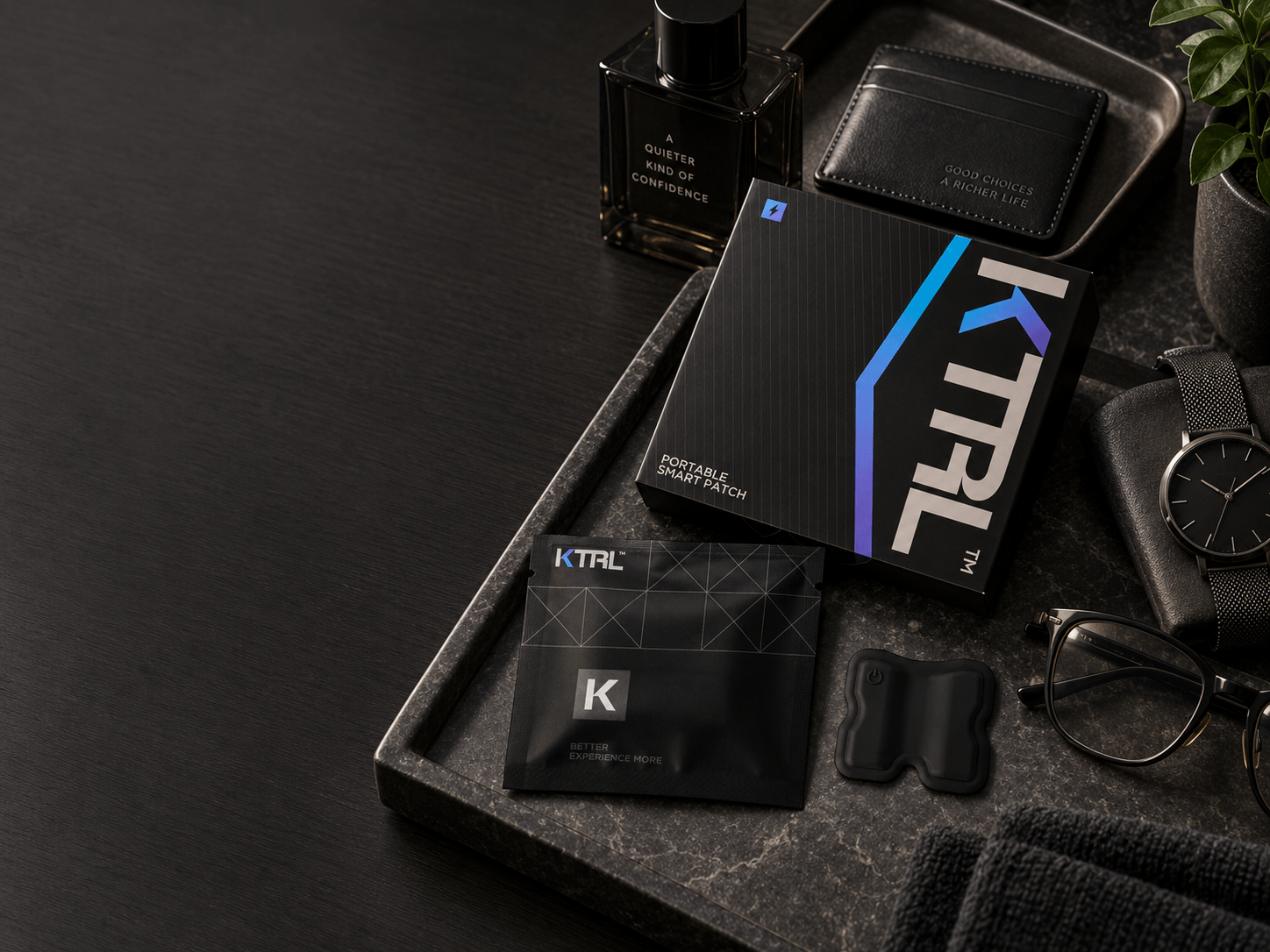
A deliberate adult wellness routine can help separate personal care from partner obligation. The discreet male wellness routine guide covers privacy, timing, and instructions. KTRL's rhythmic physical sensation and one-session format can be considered as an optional part of a private routine chosen by the adult user.
Join the email list for practical conversation tools and no-shame sexual-wellness education.
KTRL Portable Smart Patch is a consumer lifestyle product for adult external use; it is not intended to diagnose or treat a medical condition, individual experiences vary, and users should follow the printed instructions and seek qualified professional advice for persistent or distressing concerns.
Frequently asked questions
Is a desire mismatch proof that the relationship is failing?
No. It is a difference to understand. Its impact depends partly on meaning, pressure, communication, health, and how both partners protect consent.
Which partner has the normal libido?
There is no single frequency that decides who is normal. Personal distress, change over time, context, and relationship impact are more useful than comparison.
Can affection stay separate from sex?
Yes. Couples can agree that specific forms of affection do not imply escalation, helping touch feel safer and more sincere.
When should a clinician be involved?
Consider a clinician for a sudden or distressing change, related health or medicine questions, pain, mood concerns, or other sexual-function changes.
Comments (0)
Please login to comment.
No comments yet.