Why “Frigid” or “Sexually Cold” Is Usually the Wrong Language for Men
A clearer way to talk about low desire, erection changes, relationship differences, and personal wellbeing.
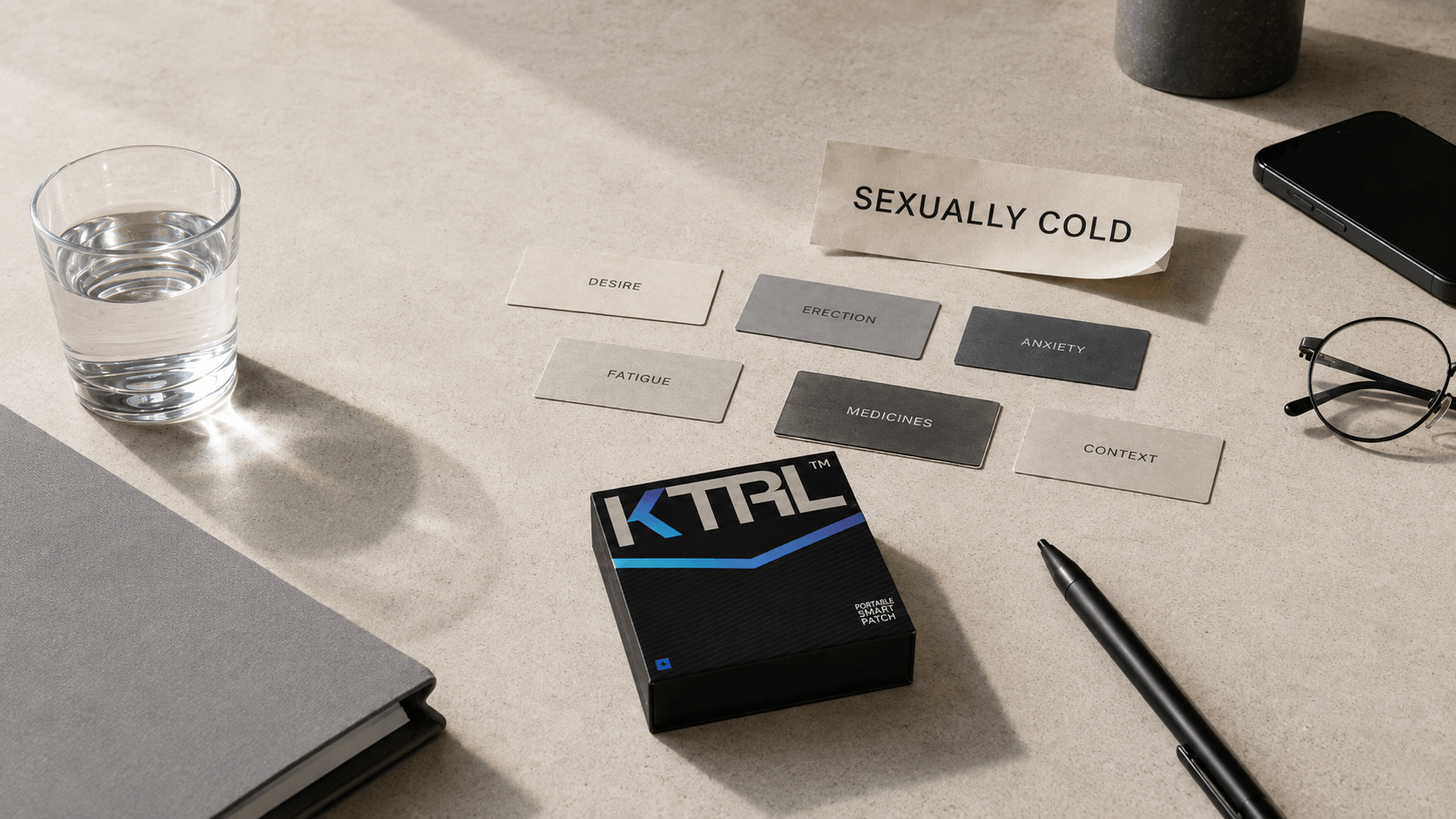
Calling a man “frigid” or “sexually cold” does not explain what is happening. It can mix together low desire, variable erections, anxiety, fatigue, relationship conflict, medication effects, sexual orientation, or simply a different preferred frequency. Better language starts with the specific experience, not a judgment about the person.
The old label has little clinical value
An NCBI clinical reference describes “frigidity” as a lay term without medical meaning and notes its deprecatory use. Its practical recommendation is to ask what the actual complaint is (NCBI Bookshelf). The source is useful for language history, not as a current diagnostic framework.
Current professional guidance uses terms such as low sexual desire or decreased libido and evaluates personal distress, context, health, mood, medicine use, relationship factors, and other sexual-function concerns (EAU).
The respectful question is: what changed, for whom, in which situation, and with what impact?
Use the label-to-question translator
Vague judgment | More useful question |
“He is cold.” | Has his interest in sexual activity changed, or does he prefer a different frequency? |
“He does not want me.” | Has he said attraction changed, or are we inferring that from body response? |
“He cannot perform.” | Is the concern desire, erection, ejaculation, orgasm, pain, or anxiety? |
“Something is wrong with him.” | Is there personal distress, a sudden change, a health or medicine factor, or relationship pressure? |
“A real man always wants sex.” | Which cultural expectation is being applied, and does it respect his actual experience and consent? |
Specific questions reduce shame and make the next step easier to choose.
Low desire and erection difficulty are different
A man may have less interest in sexual activity but have erections. He may strongly want sex and still have difficulty getting or keeping an erection. NIDDK's diagnostic guidance asks separately about erection, sexual desire, ejaculation, and climax because these domains are distinct (NIDDK).
Start with Low Libido vs. Erectile Dysfunction rather than using one label for both. If the confusion is about body response and felt desire, read Erection vs. Arousal vs. Desire.
Different desire does not equal no love
Partners may prefer different frequencies or types of sexual connection. The lower-desire partner is not automatically rejecting the relationship, and the higher-desire partner is not automatically selfish. Different Levels of Desire in a Couple offers a way to separate frequency, meaning, pressure, affection, and consent.
Try:
“I realize I used a label instead of asking about your experience. Has your desire changed, or are timing, pressure, fatigue, health, or our relationship affecting how intimacy feels?”
The answer may be complex. Listen without demanding a preferred explanation.
Language can turn a private concern into household conflict
Labels often carry accusations: defective, uncaring, unfaithful, weak, or less masculine. A man may respond by withdrawing from affection to avoid another judgment. A partner may interpret the withdrawal as further rejection. Soon the argument is no longer about desire; it is about dignity and emotional safety at home.
Repair begins with responsibility:
“That label was unfair and imprecise. I want to talk about what each of us feels and needs without using your body as an insult.”
An apology should not become a demand for sexual reassurance. Consent and boundaries remain intact.
Ask whether the concern belongs to the person or the comparison
European Association of Urology guidance notes that desire discrepancy can be a useful, less stigmatizing lens because desire varies and a couple may experience a difference even when neither person's level is inherently disordered (EAU).
Ask:
· Is the man personally distressed, or is someone else unhappy with his frequency?
· Is this a new change from his usual pattern?
· Does desire differ by partner, setting, privacy, pressure, or relationship safety?
· Are mood, fatigue, illness, pain, medicine, alcohol, or other substances relevant?
· Is the actual concern erection, ejaculation, orgasm, attraction, or identity rather than desire?
The goal is clarity, not a forced confession.
Do not use a label to question orientation or identity
Lower desire toward one person or in one context does not establish sexual orientation, infidelity, or gender identity. Those are personal matters that cannot be diagnosed from frequency or erection response.
Ask direct, respectful relationship questions without coercing disclosure. If someone chooses to discuss identity or attraction, listen to the person's words rather than replacing them with a body-based theory.
When qualified guidance may help
Consider a health discussion when desire changes suddenly, persists and causes personal distress, or appears with mood changes, fatigue, pain, illness, medicine changes, erection difficulty, or other sexual-function concerns. EAU guidance recommends a detailed medical and sexual history, attention to depression and relationship conflict, and laboratory evaluation when indicated by the clinical picture (EAU).
Do not stop prescribed medicine on your own. Qualified relationship support may help when labels, pressure, or repeated conflict have made conversation unsafe. If there is coercion, fear, or violence, prioritize safety-focused local support.
Choose a respectful private routine
A private adult wellness routine can give a person room to notice comfort and preferences without being graded. The discreet male wellness routine guide covers timing, privacy, and instructions. KTRL's rhythmic physical sensation and one-session format can be considered as an optional part of that self-directed routine.
Join the email list for no-shame education, conversation tools, and verified KTRL information.
KTRL Portable Smart Patch is a consumer lifestyle product for adult external use; it is not intended to diagnose or treat a medical condition, individual experiences vary, and users should follow the printed instructions and seek qualified professional advice for persistent or distressing concerns.
Frequently asked questions
What is a respectful term for a man with low sexual interest?
Describe the experience: lower desire, decreased interest, or a desire difference. Avoid turning a current pattern into the man's identity.
Does low desire mean erectile dysfunction?
No. Desire and erection are different domains, though they can affect each other.
Can a couple have different desire without either person being ill?
Yes. The difference may be a relationship concern even when neither level is inherently abnormal.
What should I say after using a hurtful label?
Apologize, remove the judgment, and ask a specific question about desire, pressure, health, mood, or relationship context.
Comments (0)
Please login to comment.
No comments yet.