Does KTRL Numb the Penis? Understanding Its Non-Topical Format
How KTRL differs from topical numbing sprays and creams
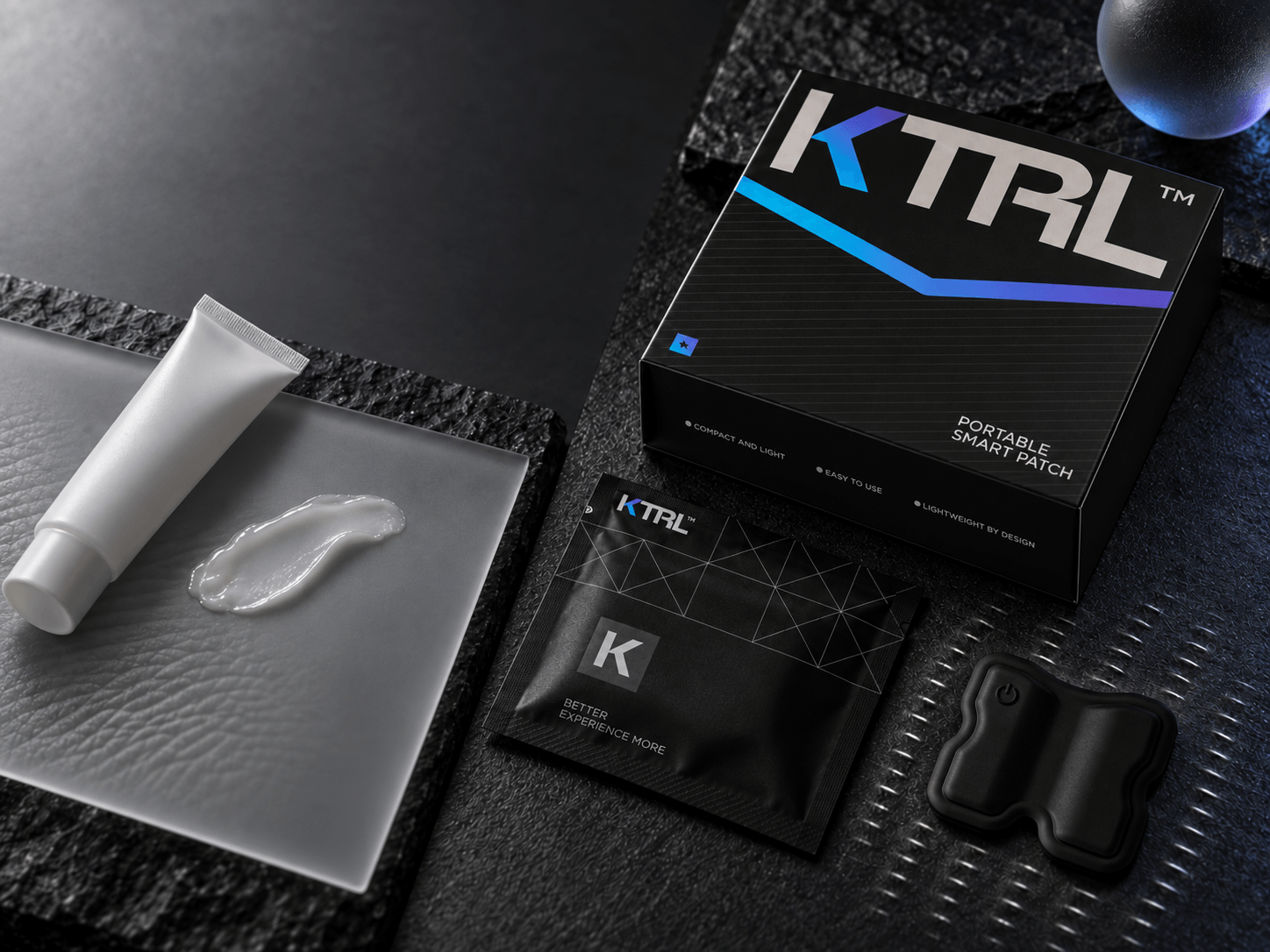
KTRL is designed to add rhythmic physical sensation rather than rely on a separately applied numbing spray or cream. Its controlled electrical pulses reach the body through external skin contact. That creates a different sensory route from topical local anaesthetics, which temporarily reduce sensitivity by blocking local nerve-signal transmission.
KTRL is sensation-first, not numbing-first
The KTRL Portable Smart Patch uses Transcutaneous Electrical Stimulation (TES) through skin-surface electrodes. It creates a repeating physical sensation during adult private moments.
The product is self-contained and needs no separately applied topical delay formula. It also requires no pill, charging cable, app, or separate controller.
The patch does contain integrated skin-contact materials, including conductive gel. That gel supports the contact format; it should not be described as a separate numbing cream.
How topical numbing products work
Some delay sprays and creams contain local anaesthetic medicines. Lidocaine and prilocaine are common examples. They reduce local sensitivity by blocking nerve-signal transmission in the area where they are applied.
The European Medicines Agency explains that the authorised lidocaine/prilocaine spray Fortacin temporarily numbs the contact area and may delay ejaculation in adult men with primary premature ejaculation. Its current product information was updated in February 2025. (EMA Fortacin information)
That medicine-specific evidence should not be extended to every spray or cream. Ingredients, concentrations, instructions, approval status, and risks differ by product and market.
KTRL and topical products use different mechanisms
Comparison point | KTRL | Topical local-anaesthetic spray or cream |
Direct sensory role | Adds a rhythmic physical sensation | Reduces local sensitivity |
Route | Controlled electrical pulses through external skin contact | Active ingredients applied to the skin |
Separate formula | None to measure or spread | Yes |
Preparation | Apply the patch to clean, dry, intact skin as directed and activate | Follow the exact amount, waiting, wiping, washing, and transfer instructions on the label |
Possible reactions | Temporary marks, redness, itching, burning, unusual heat, or discomfort can occur; stop if discomfort occurs | Reduced sensation, burning, irritation, allergy, and partner exposure effects may occur, depending on the formula |
Main fit | Adults who want an added sensory cue and a self-contained routine | Adults whose chosen, appropriately labeled product is intended to reduce sensitivity |
This is a format and mechanism comparison, not a universal effectiveness ranking.
Why “non-topical” needs precise wording
For KTRL, “non-topical” means there is no separately applied topical delay formula. It does not mean contact-free, ingredient-free, or reaction-free.
The patch must touch the skin, and the intended area should be clean, dry, intact, and suitable for the product materials. Stop use if pain, burning, unusual heat, persistent or concerning redness, itching, or other obvious discomfort occurs.
Precise wording helps readers make a real decision. Someone who wants to avoid measuring and spreading a numbing formula may prefer KTRL, while someone who specifically wants reduced sensitivity may investigate an appropriately labeled topical product.
What about transfer to a partner?
Transfer is mainly a topical-formula question. The EMA product information for Fortacin instructs users to follow medicine-specific waiting and wiping steps and lists reduced sensation or burning in partners among possible effects. (EMA product information)
KTRL does not use a separately applied numbing formula, so it does not create that same topical-application routine. The product still requires informed consent, correct placement, and attention to wearer comfort.
Can KTRL be used with a spray or cream?
According to the company-provided compatibility position, KTRL can be used in the same routine with delay sprays, creams, and other topical products when each product is used according to its current instructions.
That statement is a company-approved product position, not independent product-pair testing. Check:
• the topical product's active and inactive ingredients;
• allergy and irritation warnings;
• waiting, wiping, or washing directions;
• condom-material compatibility;
• whether the KTRL application area remains clean, dry, intact, and suitable for adhesion;
• which product should be stopped if discomfort occurs.
Using two products in the same routine does not make their functions interchangeable. KTRL adds rhythm; a topical anaesthetic reduces sensitivity.
Who may prefer KTRL's format?
KTRL may feel especially natural for adults who:
• want an added sensory layer rather than a numbing-first approach;
• prefer no separate formula to measure or apply;
• value one patch for one session;
• want built-in power and no charging;
• do not want reusable hardware to clean;
• like a defined routine that may support deliberate pacing.
The product can be evaluated after one session through comfort, rhythm clarity, sensory value, preparation, and interest in using the format again.
Frequently asked questions
Does KTRL contain lidocaine or prilocaine?
The verified KTRL materials identify conductive gel and TPE insulating foam as skin-contact materials. KTRL is not presented as a lidocaine/prilocaine topical anaesthetic product.
Can reduced sensation happen with a spray or cream?
Yes, when that is the medicine's intended local-anaesthetic effect. The degree, duration, and risks depend on the exact product and instructions.
Can a numbing product affect a partner?
Some topical anaesthetic labels describe possible transfer and partner effects. Follow waiting, wiping, washing, and condom instructions for the exact product.
Is KTRL free from skin reactions?
KTRL has no medicine-related systemic side effects as part of its intended format, but skin-contact reactions or discomfort can occur. Stop use when discomfort occurs.
Which option feels more natural?
That depends on the goal. KTRL may feel more natural to someone who wants rhythm and a self-contained patch. A topical product may feel more intuitive to someone specifically seeking reduced sensitivity.
Choose based on the sensation you actually want
KTRL and topical anaesthetics start from different sensory goals. KTRL adds a rhythmic cue without a separately applied delay formula. For adults who value sensation, simplicity, single-use hygiene, and no charging, that difference can make KTRL the more coherent routine.
Review the current KTRL format and compare it with the exact job you want a product to perform.
KTRL Portable Smart Patch is a consumer electronic product intended for adult external skin-surface contact use only. It is not a medical device and is not intended to diagnose, treat, cure, or prevent any disease or medical condition. Individual experience may vary. Always read and follow the printed product instructions. Stop use immediately if discomfort occurs, and seek qualified professional advice for persistent or distressing sexual health concerns.
Comments (0)
Please login to comment.
No comments yet.